Choosing the right school is one of the most important decisions parents make for their children. Every parent wants their child to perform well in academics, build confidence, develop strong values, and succeed in life. In today's fast-changing world, traditional classroom learning alone is no longer enough.
Children need an education that prepares them for real-life challenges, future careers, emotional well-being, and personal growth. This is where holistic education plays a vital role. Holistic education is becoming the future of schooling because it focuses on the complete development of a child. It combines academic learning with social skills, emotional intelligence, creativity, leadership, physical fitness, and character building.
What Is Holistic Education?
Holistic education is an approach that focuses on developing the whole child rather than concentrating only on academic performance.
It helps students grow in multiple areas such as:
-
Academic excellence
-
Emotional well-being
-
Physical fitness
-
Social skills
-
Creativity and innovation
-
Leadership abilities
-
Critical thinking
-
Communication skills
-
Moral values
-
Problem-solving skills
Instead of measuring success only through marks and grades, holistic education encourages children to become confident, capable, and compassionate individuals.
Why Traditional Education Alone Is No Longer Enough
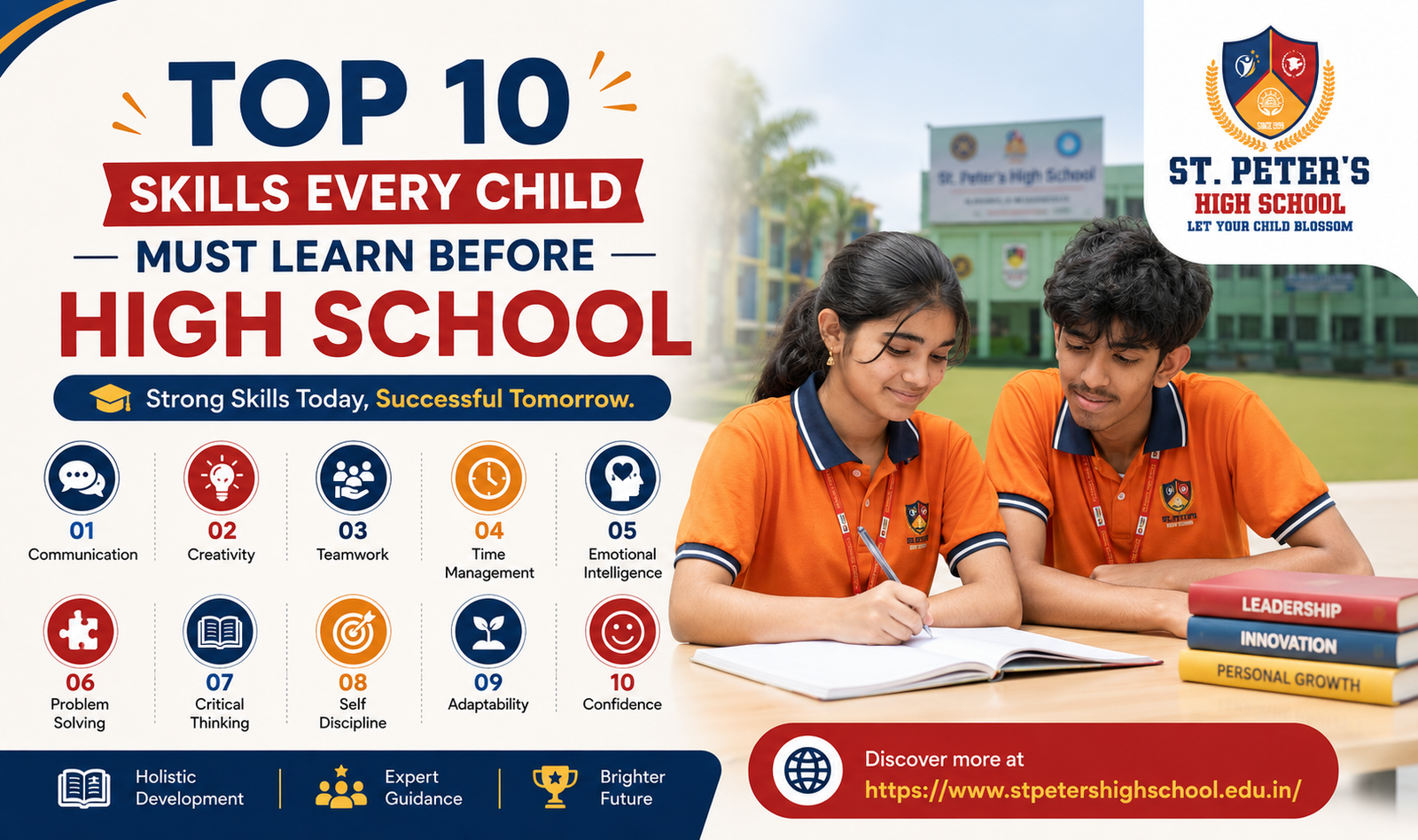
The world is changing faster than ever before. Technology, artificial intelligence, global communication, and evolving career opportunities are transforming the skills students need to succeed. Many jobs that exist today did not exist a decade ago. Similarly, future careers will require skills beyond textbook knowledge.
Children need:
-
Adaptability
-
Creativity
-
Teamwork
-
Emotional intelligence
-
Leadership
-
Communication
-
Innovation
-
Decision-making abilities
Traditional learning methods often focus heavily on memorization and examinations. While academics remain important, students also need practical experiences and life skills. This is why holistic education is increasingly recognized as the future of schooling.
The Key Benefits of Holistic Education
Academic Excellence with Deeper Understanding
One common misconception is that holistic education reduces academic focus. In reality, it strengthens learning by helping students understand concepts rather than simply memorizing information.
When children participate in discussions, projects, experiments, and collaborative activities, they develop stronger analytical and critical thinking skills. As a result, they perform better academically and retain knowledge for a longer time.
Builds Emotional Intelligence
Success in life depends not only on intelligence but also on emotional strength. Holistic education teaches students how to:
-
Understand emotions
-
Manage stress
-
Build resilience
-
Show empathy
-
Develop healthy relationships
These skills help children navigate challenges confidently and maintain a positive mindset throughout life.
Encourages Creativity and Innovation
Creativity is one of the most valuable skills in today's world. Children need opportunities to think independently, explore ideas, and express themselves freely.
Through activities such as:
-
Art
-
Music
-
Drama
-
Storytelling
-
Innovation projects
-
Design thinking
Students learn how to approach problems creatively and develop innovative solutions.
Strengthens Communication Skills
Strong communication skills are essential in education, careers, and personal relationships. Holistic education encourages:
-
Public speaking
-
Presentations
-
Group discussions
-
Debates
-
Collaborative projects
These experiences help students become confident speakers and effective communicators.
Develops Leadership Qualities
Future leaders are not created overnight. Leadership skills begin developing during school years through opportunities to:
-
Take responsibility
-
Lead teams
-
Organize activities
-
Participate in student councils
-
Manage projects
Holistic education creates environments where students learn leadership through practical experiences.
Improves Physical Health and Well-Being
Physical fitness directly impacts academic performance and emotional health. A holistic learning environment promotes:
-
Sports participation
-
Healthy habits
-
Team activities
-
Outdoor learning experiences
Active children are often more focused, energetic, and confident in the classroom.
How Holistic Education Prepares Children for Future Careers
Employers today are looking for much more than academic qualifications. They seek individuals who can:
-
Solve problems
-
Work in teams
-
Communicate effectively
-
Adapt to change
-
Think creatively
-
Lead with confidence
Holistic education develops these future-ready skills from an early age. Children who experience holistic learning become lifelong learners who are prepared for higher education, professional success, and personal fulfillment.
The Role of Technology in Holistic Education
Technology has become an important part of modern education. However, technology should enhance learning rather than replace human interaction.
A balanced holistic education uses technology to:
-
Improve engagement
-
Support personalized learning
-
Encourage research skills
-
Enhance creativity
-
Build digital literacy
At the same time, students continue developing interpersonal skills, emotional intelligence, and critical thinking. This balanced approach prepares children for a technology-driven future while maintaining strong human values.
Why Parents Are Choosing Holistic Education
More parents today understand that academic scores alone do not determine long-term success.
Parents increasingly seek schools that provide:
-
Comprehensive development
-
Individual attention
-
Character education
-
Life skills training
-
Emotional support
-
Leadership opportunities
-
Sports and extracurricular activities
Holistic education meets these expectations by nurturing every aspect of a child's growth.
Holistic Education and Character Building
Strong character forms the foundation of lifelong success.
Schools play an important role in helping children develop values such as:
-
Honesty
-
Respect
-
Responsibility
-
Kindness
-
Integrity
-
Discipline
These values influence how students interact with others and make decisions throughout their lives. A holistic education environment helps students become not only successful professionals but also responsible citizens.
How St. Peter's High School Supports Holistic Education
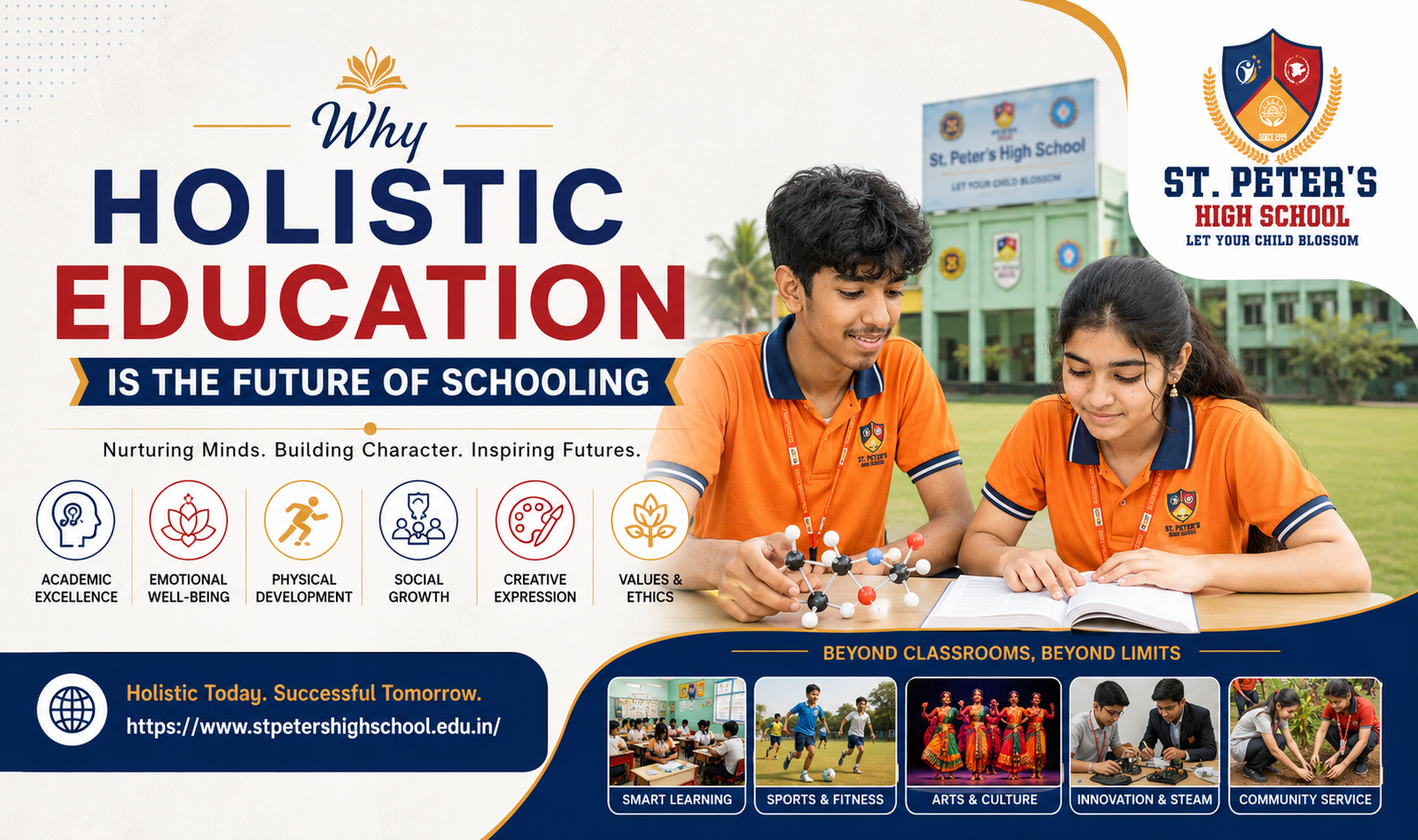
Founded in 1999, St. Peter's High School has always believed in nurturing the unique potential of every child. Our motto, "Let Your Child Blossom," reflects our commitment to helping students grow academically, emotionally, socially, and personally. At St. Peter's High School, holistic education is integrated into every aspect of student life.
Our approach includes:
Strong Academic Foundation: We provide high-quality CBSE education that promotes conceptual understanding, critical thinking, and academic excellence.
Sports and Physical Development: Students participate in various sports and fitness activities that encourage teamwork, discipline, and healthy lifestyles.
Arts and Creative Expression: We encourage creativity through music, art, dance, cultural events, and performance opportunities.
Leadership Development: Students receive opportunities to build confidence and leadership through school activities and responsibilities.
Values-Based Education: Character development remains a core part of our educational philosophy.
Technology-Enhanced Learning: We combine modern teaching methods with innovative learning tools to prepare students for the future.
To learn more about our educational philosophy, visit About St. Peter's High School.
You can also explore our academic programs through the CBSE academic curriculum.
Conclusion
The future of schooling is not limited to textbooks, grades, and examinations. It is about nurturing confident, capable, compassionate, and future-ready individuals. Holistic education empowers children to excel academically while developing the life skills, values, creativity, and emotional strength needed for long-term success.
At St. Peter's High School, Bowenpally, we are committed to helping every child blossom through a balanced and comprehensive learning experience. By combining academic excellence with personal growth, we prepare students to thrive in an ever-changing world. For parents seeking a school that focuses on the complete development of their child, holistic education is not simply an educational trend. It is the future of schooling.
Frequently Asked Questions (FAQs)
1. What is holistic education?
Holistic education is a learning approach that focuses on the overall development of a child, including academics, emotional well-being, physical fitness, creativity, leadership, and social skills.
2. Why is holistic education important for children?
Holistic education helps children develop essential life skills, confidence, emotional intelligence, and academic excellence, preparing them for future success.
3. How does holistic education improve academic performance?
By encouraging critical thinking, practical learning, creativity, and active participation, holistic education helps students understand concepts better and perform well academically.
4. What skills do students gain through holistic education?
Students develop communication skills, leadership abilities, teamwork, problem-solving skills, creativity, emotional intelligence, and adaptability.
5. How does St. Peter's High School implement holistic education?
St. Peter's High School combines strong academics, sports, arts, technology, leadership opportunities, and values-based learning to support the complete development of every student.