Every parent dreams of seeing their child grow into a confident, responsible, and successful individual. While academic excellence remains important, the modern world demands much more than good grades. Children today need a combination of knowledge, confidence, adaptability, and practical abilities to succeed in school and beyond.
As children prepare to enter high school, they face new academic challenges, social environments, and greater responsibilities. This transition becomes smoother when they already possess important life skills for students that help them manage situations independently and confidently.
At St. Peter's High School, Bowenpally, we believe that education is about nurturing the complete child. Since 1999, our mission has been to help every child blossom by developing not only academic excellence but also essential learning skills for students that prepare them for lifelong success.
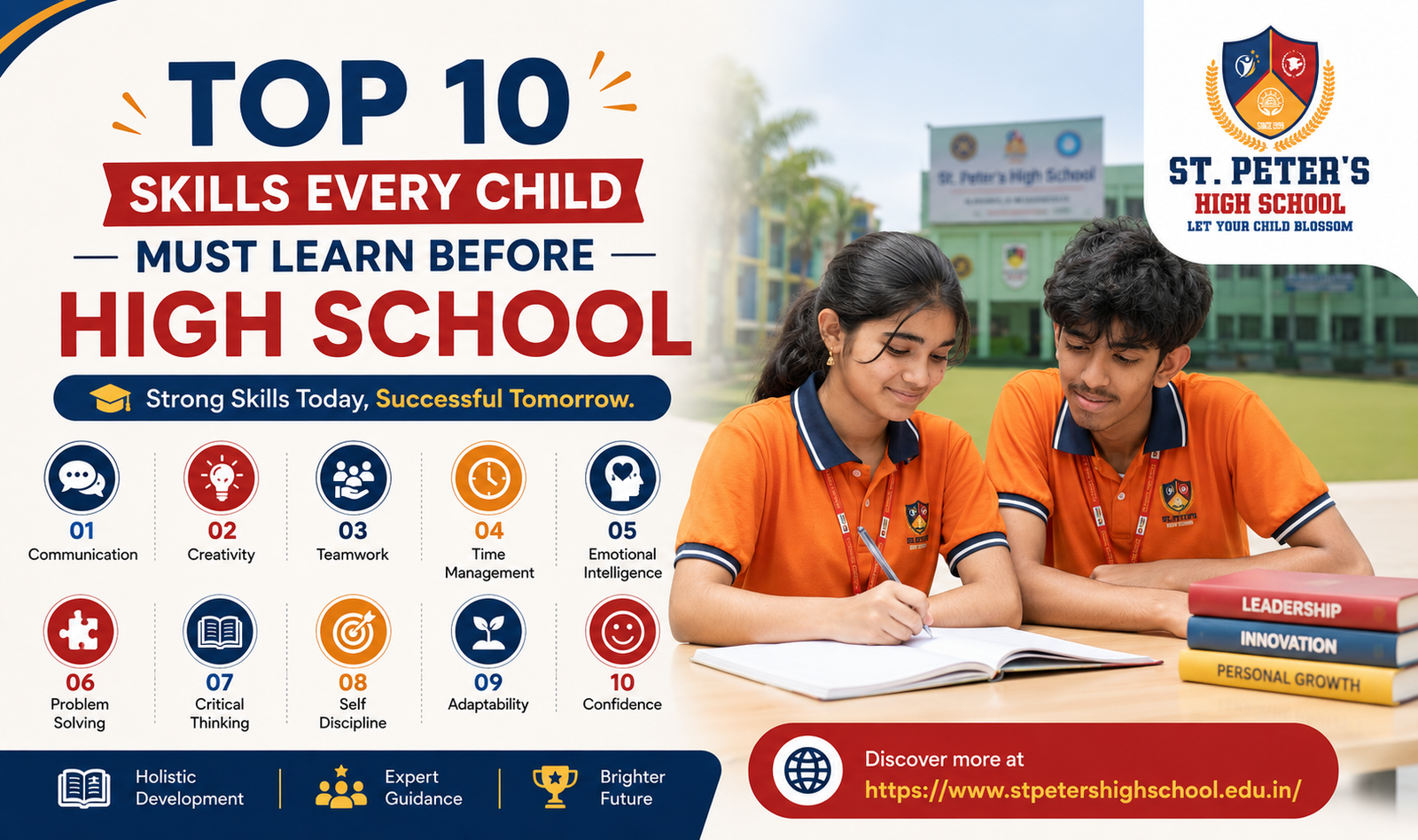
In this blog, we explore the top 10 skills every child should learn before entering high school and why these skills are becoming increasingly important in today's world.
Why Life Skills Matter Before High School
Children who develop strong life skills early often:
-
Adapt better to new environments
-
Build healthy relationships
-
Handle challenges confidently
-
Become independent learners
-
Improve academic performance
-
Develop leadership qualities
-
Make better decisions
These skills form the foundation for future success in education, careers, and personal life.
1. Effective Communication Skills
Communication is one of the most important life skills for students.
Children should learn how to:
-
Express their thoughts clearly
-
Listen actively
-
Ask questions confidently
-
Participate in discussions
-
Respect different opinions
Strong communication skills help students build friendships, collaborate with classmates, and interact confidently with teachers. Children who communicate effectively often perform better in group projects, presentations, and leadership roles.
2. Time Management and Organization
As children move into high school, managing multiple subjects, assignments, activities, and responsibilities becomes essential.
Students should learn how to:
-
Create schedules
-
Prioritize tasks
-
Meet deadlines
-
Organize study materials
-
Balance academics and hobbies
Time management is one of the most valuable learning skills for students because it helps reduce stress and improves productivity.
3. Problem-Solving Skills
Life presents challenges every day. Teaching children how to solve problems independently helps them become confident decision-makers.
Problem-solving includes:
-
Identifying the issue
-
Thinking logically
-
Exploring solutions
-
Evaluating outcomes
-
Learning from mistakes
Whether solving a math question or handling a social situation, strong problem-solving abilities help students grow into resilient individuals.
4. Critical Thinking Skills
The digital age provides unlimited information. Children must learn how to think critically rather than simply accepting everything they read or hear.
Critical thinking helps students:
-
Analyze information
-
Differentiate facts from opinions
-
Make informed decisions
-
Ask meaningful questions
-
Develop independent viewpoints
These skills are especially valuable as students begin more advanced academic studies in high school.
5. Emotional Intelligence
Understanding emotions is just as important as understanding academics.
Emotional intelligence includes:
-
Recognizing feelings
-
Managing emotions
-
Showing empathy
-
Handling conflicts peacefully
-
Building positive relationships
Students with strong emotional intelligence often demonstrate better teamwork, stronger friendships, and improved mental well-being.
6. Self-Discipline and Responsibility
Success often comes from consistency rather than talent alone.
Children should learn to:
-
Complete tasks without reminders
-
Take ownership of their actions
-
Follow routines
-
Accept accountability
-
Develop healthy habits
Self-discipline is among the most valuable life skills for students because it supports academic achievement and personal growth throughout life.
7. Digital Literacy and Online Safety
Technology plays a major role in education today.
Children must understand:
-
Safe internet usage
-
Responsible social media behavior
-
Online privacy
-
Digital communication etiquette
-
Reliable information sources
Teaching digital literacy helps students use technology productively while protecting themselves from online risks.
Parents looking for a future-ready learning environment can explore academic excellence at St. Peter's High School, where technology and education work together to support student growth.
8. Teamwork and Collaboration
Modern workplaces and educational environments value collaboration.
Students should learn how to:
-
Work effectively in groups
-
Respect diverse perspectives
-
Share responsibilities
-
Resolve disagreements respectfully
-
Support team goals
Teamwork helps children develop leadership qualities while understanding the importance of cooperation.
9. Adaptability and Resilience
The world changes rapidly. Children who can adapt to new situations often handle challenges more effectively.
Adaptability involves:
-
Accepting change
-
Learning from failures
-
Staying positive during difficulties
-
Trying new approaches
-
Building confidence through experience
Resilient students are better prepared to navigate academic challenges, social changes, and future career demands.
10. Leadership and Decision-Making Skills
Leadership is not just about leading others. It is about taking initiative, making responsible choices, and inspiring positive action.
Children can develop leadership skills by:
-
Taking responsibility
-
Participating in school activities
-
Setting goals
-
Helping peers
-
Practicing ethical decision-making
These experiences prepare students for future leadership opportunities in academics, sports, and community life.
To learn how holistic development shapes future leaders, visit About St. Peter's High School and discover our student-centered approach to education.
The Role of Schools in Developing Life Skills
Schools play an important role in helping students develop both academic and personal competencies.
An effective school environment should provide:
-
Strong academic foundations
-
Character development programs
-
Sports and physical education
-
Leadership opportunities
-
Creative arts exposure
-
Technology-integrated learning
-
Social and emotional learning support
At St. Peter's High School, our educational approach focuses on nurturing well-rounded individuals who are prepared not only for examinations but also for life's opportunities and challenges.
Our commitment to holistic development ensures that students gain the essential life skills for students needed to thrive in an ever-changing world.
Conclusion
Preparing children for high school involves much more than completing academic lessons. They need practical abilities, emotional strength, communication skills, and confidence to navigate an increasingly complex world. The development of strong life skills for students and essential learning skills for students helps children become independent thinkers, responsible citizens, and future leaders.
At St. Peter's High School, Bowenpally, we remain committed to our founding vision of helping every child blossom. Through academic excellence, character building, and holistic development, we provide students with the tools they need to succeed both inside and outside the classroom. As parents plan their child's educational journey, choosing a school that nurtures these essential skills can make a lasting difference in shaping a bright and successful future.
Frequently Asked Questions (FAQs)
1. What are the most important life skills for students before high school?
The most important life skills for students include communication, time management, problem-solving, emotional intelligence, teamwork, self-discipline, adaptability, leadership, critical thinking, and digital literacy.
2. Why are learning skills for students important?
Learning skills for students help children become independent learners, improve academic performance, build confidence, and prepare for future educational and career challenges.
3. How can parents help children develop life skills?
Parents can encourage responsibility, promote reading, support extracurricular activities, allow problem-solving opportunities, and maintain open communication with their children.
4. At what age should children start learning life skills?
Children can begin developing life skills from an early age through everyday experiences, responsibilities, social interactions, and guided learning opportunities.
5. How does St. Peter's High School support holistic student development?
St. Peter's High School focuses on academic excellence, leadership development, sports, arts, technology integration, and character building to help students grow into confident and capable individuals.